Alcohol addiction affects people from every background, age group, and walk of life. What often begins as occasional drinking can gradually develop into dependence, making it difficult to stop without professional support. Because this progression typically happens over time, many people do not recognize the severity of the problem until alcohol has already begun affecting their health, relationships, career, or daily responsibilities.
According to the National Institute on Alcohol Abuse and Alcoholism (NIAAA), approximately 28.9 million Americans ages 12 and older had alcohol use disorder (AUD) in 2023. These numbers highlight the widespread impact of alcohol addiction and the importance of accessible treatment options.
For individuals seeking alcohol addiction treatment, Jacksonville Detox in Jacksonville, Florida, provides personalized treatment designed to help adults safely stop drinking and build a foundation for lasting recovery. Through medical detox, therapy, relapse prevention planning, and ongoing support, clients receive comprehensive care tailored to their unique needs.

Understanding Alcohol and Alcohol Use Disorder
Alcohol is a central nervous system depressant found in beverages such as beer, wine, and liquor. While drinking is socially accepted in many settings, alcohol remains one of the most commonly misused substances in the United States.
When consumed, alcohol affects communication between nerve cells and triggers the release of dopamine in the brain. This creates temporary feelings of relaxation, pleasure, or reduced stress. Over time, however, repeated alcohol use can change how the brain functions, increasing tolerance and making it more difficult to stop drinking.
Alcohol addiction rarely develops overnight. Many people begin by drinking socially or using alcohol to unwind after work. As alcohol use becomes more frequent, the brain adapts to its presence.
Over time, individuals may need larger amounts of alcohol to achieve the same effects. Cravings become stronger, drinking becomes more frequent, and stopping can trigger withdrawal symptoms. Eventually, alcohol use may continue despite negative consequences at home, work, school, or in relationships.
Alcohol use disorder is a medical condition characterized by an inability to control alcohol consumption despite harmful consequences. AUD exists on a spectrum ranging from mild to severe.
Common signs of alcohol use disorder include:
- Drinking more than intended
- Unsuccessful attempts to quit or cut back
- Spending significant time drinking or recovering from drinking
- Strong cravings for alcohol
- Continued alcohol use despite problems
- Experiencing withdrawal symptoms when alcohol use stops
When these symptoms are present, professional alcohol rehab may be necessary to achieve and maintain recovery.
How Alcohol Affects the Brain and Body
Alcohol impacts nearly every organ system in the body. Some effects are immediate, while others develop slowly over years of repeated use.
Alcohol alters brain chemistry by affecting neurotransmitters responsible for mood, decision-making, memory, and coordination. Repeated alcohol use can change the brain’s reward system, making drinking feel increasingly necessary.
As dependence develops, activities that once felt enjoyable may seem less rewarding without alcohol. This cycle contributes to cravings and ongoing alcohol use.
Even moderate alcohol consumption can produce noticeable effects, including:
- Impaired judgment
- Reduced coordination
- Slowed reaction times
- Poor decision-making
- Memory difficulties
- Increased risk of accidents and injuries
These effects can occur within minutes of drinking and become more severe as blood alcohol levels rise.
Chronic alcohol misuse can lead to serious health complications, including:
- Fatty liver disease
- Alcoholic hepatitis
- Cirrhosis
- High blood pressure
- Heart disease
- Stroke
- Digestive disorders
- Increased risk of certain cancers
Because many of these conditions develop gradually, individuals may not recognize the extent of alcohol-related damage until significant health problems occur.

Why Alcohol Withdrawal Can Be Dangerous
Alcohol withdrawal is one of the most medically serious forms of substance withdrawal. Unlike many drugs, suddenly stopping alcohol after prolonged heavy use can result in life-threatening complications.
As the body adapts to alcohol’s depressant effects, the nervous system compensates by increasing activity. When alcohol is removed, the nervous system can become overstimulated.
Common withdrawal symptoms include:
- Anxiety
- Sweating
- Nausea
- Tremors
- Increased heart rate
- Insomnia
In severe cases, withdrawal may progress to hallucinations, seizures, or delirium tremens (DTs), a potentially fatal condition characterized by confusion, agitation, and dangerous cardiovascular symptoms.
For this reason, medically supervised detox is often recommended as the first step in alcohol rehab.
Post-Acute Withdrawal Syndrome (PAWS)
While acute withdrawal typically resolves within several days, some individuals experience post-acute withdrawal syndrome (PAWS). Symptoms may persist for weeks or months and can include:
- Mood swings
- Sleep disturbances
- Fatigue
- Anxiety
- Difficulty concentrating
Ongoing therapy and aftercare services can help individuals manage these symptoms while maintaining recovery.
The Risks of Binge Drinking
Many people assume binge drinking is less serious than daily alcohol use. However, binge drinking can have significant short-term and long-term consequences.
The NIAAA defines binge drinking as a pattern of alcohol use that raises blood alcohol concentration to 0.08% or higher. This generally occurs after about four drinks for women or five drinks for men within approximately two hours.
Warning Signs of Problematic Binge Drinking
Binge drinking may indicate a need for alcohol rehab when:
- Episodes occur regularly
- Drinking continues beyond intended limits
- Negative consequences are ignored
- Relationships or work performance suffer
- Withdrawal symptoms occur between drinking episodes
Repeated binge drinking can increase the risk of alcohol dependence, accidents, alcohol poisoning, and chronic health problems.

Signs and Symptoms of Alcohol Addiction
Alcohol addiction affects behavior, emotions, and physical health. Recognizing these warning signs can help individuals seek treatment before the condition worsens.
Behavioral changes often appear early in addiction and may include:
- Drinking in secret
- Hiding alcohol
- Missing work or family obligations
- Increased isolation
- Prioritizing drinking over responsibilities
Physical symptoms of alcohol addiction may include:
- Tremors or shaking
- Sleep disturbances
- Frequent hangovers
- Flushed skin
- Increased tolerance
- Changes in appetite or weight
Alcohol addiction can significantly impact mental health.
Common symptoms include:
- Intense cravings
- Irritability
- Anxiety
- Depression
- Mood swings
- Denial about drinking habits
If alcohol use feels difficult to control or continues despite negative consequences, seeking an evaluation at an alcohol rehab Florida facility may be beneficial.
Causes and Risk Factors for Alcohol Addiction
Alcohol addiction develops from a combination of genetic, environmental, and psychological factors.
Research from NIAAA suggests that genetics account for approximately half of an individual’s risk of developing alcohol use disorder. Family history can increase vulnerability, but environmental influences also play a major role.
Additional risk factors include:
- Trauma or adverse childhood experiences
- Chronic stress
- Peer influences
- Mental health disorders
- Easy access to alcohol
- Social or cultural drinking norms
Mental health conditions such as depression, anxiety, PTSD, and bipolar disorder frequently occur alongside alcohol addiction. When both conditions are present, integrated treatment that addresses substance use and mental health simultaneously often produces better outcomes.
Alcohol Addiction Treatment at Jacksonville Detox
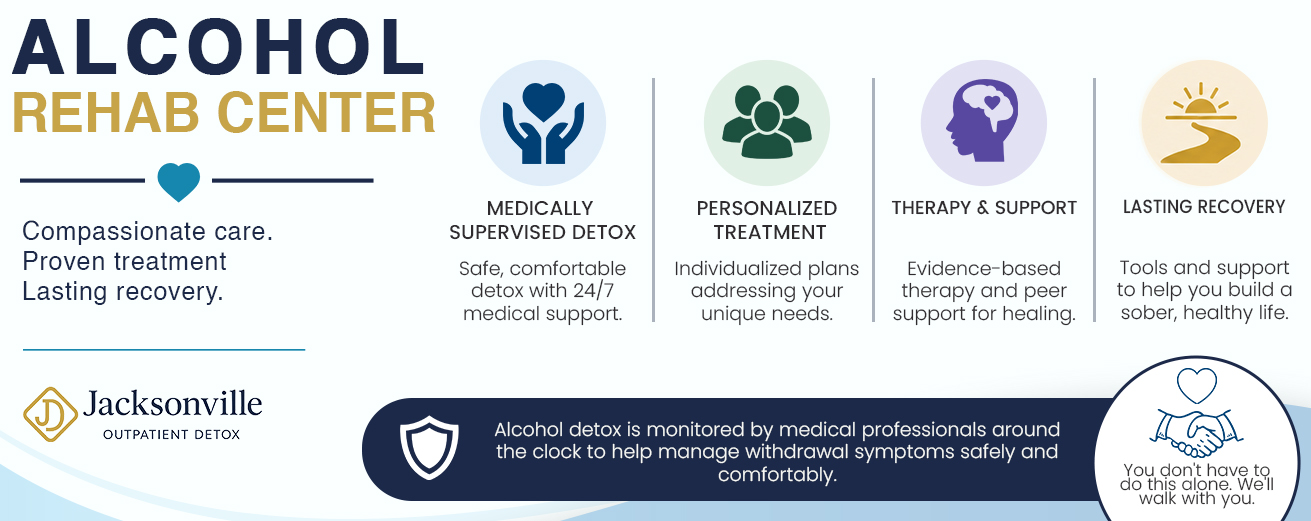
Jacksonville Detox provides evidence-based alcohol rehab in Florida designed to support recovery at every stage of the healing process.
Treatment begins with a comprehensive assessment that helps clinicians understand each client’s medical history, drinking patterns, mental health needs, and recovery goals.
For many individuals, detox is the first step in alcohol rehab.
Medical detox allows clients to withdraw from alcohol under professional supervision. Clinical staff monitor symptoms, provide supportive care, and may use FDA-approved medications when appropriate to reduce discomfort and lower the risk of complications.
Jacksonville Detox also offers outpatient detox options for individuals who qualify for a less restrictive level of care.
Behavioral therapy helps individuals understand the thoughts, emotions, and behaviors that contribute to alcohol use.
Treatment may include:
Cognitive Behavioral Therapy (CBT): Helps identify unhealthy thinking patterns and replace them with healthier coping strategies.
Dialectical Behavior Therapy (DBT): Teaches emotional regulation, distress tolerance, and interpersonal effectiveness skills.
Individual Counseling: Provides one-on-one support focused on personal challenges, goals, and recovery progress.
Long-term recovery requires preparation for real-world challenges. Relapse prevention planning helps clients identify triggers and develop practical strategies for managing cravings and stress.
Common relapse prevention topics include:
- Trigger identification
- Stress management
- Healthy coping skills
- Boundary setting
- Recovery-focused lifestyle changes
Recovery continues long after formal treatment ends.
Jacksonville Detox helps clients develop aftercare plans that may include:
- Outpatient counseling
- Support groups
- Alumni programs
- Community resources
- Continued mental health treatment
Strong aftercare support can significantly improve long-term recovery outcomes.
Levels of Care for Alcohol Rehab in Florida
Recovery needs often change over time. Jacksonville Detox offers access to multiple levels of care that allow individuals to receive the appropriate amount of support throughout treatment.
PHP provides structured treatment during the day without requiring overnight stays. This level of care is often recommended after detox or inpatient treatment.
IOP offers several therapy sessions per week while allowing clients to continue working, attending school, or managing family responsibilities.
Traditional outpatient treatment involves less frequent counseling sessions and ongoing recovery support. This option is often used during later stages of recovery.
Why Choose Jacksonville Detox for Alcohol Rehab?
Choosing the right alcohol rehab center can make a meaningful difference in recovery outcomes.
Jacksonville Detox provides:
- Personalized treatment plans
- Medically supervised detox services
- Evidence-based therapies
- Dual diagnosis treatment
- Relapse prevention planning
- Aftercare support
- Multiple levels of care
The program focuses on treating the whole person rather than simply addressing alcohol use. By identifying underlying factors that contribute to addiction, clients gain the tools needed to support lasting recovery.

Alcohol Addiction Treatment FAQs
Finding the right treatment program often brings up many questions about the process, expectations, and available support. Understanding these details helps individuals make informed decisions about their recovery journey.
The following section addresses common inquiries regarding program length, insurance coverage, and what to expect during admission. Reviewing these answers provides clarity for those preparing to enter treatment.
Program length depends on each person’s specific clinical needs, but many structured rehab programs last between 30 and 90 days.
Some clients continue with outpatient care after the initial phase of treatment.
Many private insurance plans and Medicaid cover at least part of the cost of alcohol detox and rehab services.
Coverage can usually be verified directly through the admissions team at Jacksonville Detox.
Most clients bring comfortable clothing, personal hygiene items, a valid photo ID, and any prescribed medications in their original bottles.
The treatment center will provide a detailed packing list before admission.
Many alcohol rehab programs encourage family involvement and offer structured family therapy sessions or designated visitation times.
Visitation policies are typically reviewed during intake.
Detoxing from alcohol at home is not recommended because withdrawal symptoms can quickly become medically dangerous.
Medically supervised detox provides 24/7 monitoring and medication support.
Approaching the conversation with empathy, using specific observations about their behavior, and avoiding blame creates a supportive environment.
Focusing on concern for their health and sharing information about local treatment options can make the conversation more productive.

Begin Your Recovery Journey Today
Seeking help for alcohol addiction can feel overwhelming, but recovery is possible with the right support. Alcohol use disorder is a treatable medical condition, and no one has to face withdrawal, cravings, or recovery challenges alone.
Jacksonville Detox offers comprehensive alcohol rehab in Florida that includes medical detox, therapy, relapse prevention, and ongoing support. Whether someone is seeking help for themselves or a loved one, reaching out for professional guidance can be the first step toward a healthier future.
If you are looking for alcohol rehab in Jacksonville, FL, contact Jacksonville Detox today to learn more about available treatment options and begin your recovery journey.