Addiction recovery doesn’t end when a treatment program is completed; in many ways, it marks the beginning of a long-term journey toward a healthy, stable life. Aftercare programs are essential for helping individuals maintain sobriety by providing ongoing support, structure, and resources after formal treatment.
Understanding aftercare can help individuals and families see the value of continued care in recovery. From therapy and support groups to relapse prevention planning and lifestyle guidance, these programs help people stay connected, accountable, and focused on long-term success.
Jacksonville Detox in Jacksonville, Florida, offers a comprehensive aftercare program tailored to the unique needs of the local community, providing a smooth transition from clinical care to independent, sustainable living. Reach out to learn how our aftercare program can support your continued success in recovery.
What is an Aftercare Program?
An aftercare program for substance abuse is a personalized plan that provides ongoing support after completing initial treatment. These programs can include:
- Individual therapy sessions
- Group therapy and peer support meetings
- Sober living arrangements
- Regular check-ins with addiction counselors
The goal of aftercare is to help individuals maintain sobriety while reintegrating into their daily lives. Programs are customized to account for work schedules, family responsibilities, and personal goals. This is especially important for adults who are balancing recovery with other life obligations, ensuring they have the tools and guidance needed to prevent relapse.
In Florida, aftercare programs are considered an essential component of long-term recovery. They offer structured support, practical resources, and a strong community network to empower individuals as they rebuild their lives and continue their journey toward lasting sobriety.
Types of Addiction Aftercare Programs
Aftercare programs can take many forms, allowing individuals to find the type of support that best fits their recovery needs. By offering various levels of care, these programs help individuals maintain sobriety and strengthen the coping skills learned during treatment.
Outpatient aftercare programs allow individuals to continue therapy while living at home. Services typically include:
- Regular individual counseling sessions
- Group therapy
- Educational workshops on relapse prevention
Outpatient care is ideal for people who have completed a higher level of treatment and are ready to practice recovery skills in real-life situations. It provides a safety net while allowing clients to continue working, going to school, or managing family responsibilities.
Sober living homes provide a structured, substance-free environment for people transitioning from residential treatment to independent living. Residents are expected to follow house rules, attend meetings, and support one another in recovery.
Benefits of sober living homes include:
- Structured daily routines
- Peer accountability
- Opportunities to practice life skills in a safe environment
- Building a supportive recovery community
This type of housing is especially beneficial during the first year after treatment when the risk of relapse is highest.
Support groups, including 12-step programs and peer-led recovery networks, are integral to aftercare. These groups provide:
- A safe space to share experiences
- Encouragement from others in recovery
- Guidance from peers who have faced similar challenges
Regular participation in support groups helps reduce feelings of isolation, reinforces accountability, and increases the likelihood of maintaining sobriety.
Virtual aftercare options have become increasingly popular, offering therapy, support groups, and recovery resources online. Benefits of telehealth include:
- Flexibility for busy schedules
- Access for people in rural or remote areas
- Privacy and convenience
Online sessions can include video counseling, virtual support meetings, and digital tools to track recovery progress, making it easier to stay engaged in recovery regardless of location.
Purpose of Aftercare Programs for Addiction
The primary purpose of an aftercare program is to provide continued support and guidance following formal treatment. Recovery is an ongoing process, and aftercare ensures individuals have access to resources, counseling, and peer support that help them:
- Recognize and manage triggers
- Cope with stress
- Avoid relapse
- Reinforce healthy habits learned in treatment
Aftercare programs help individuals build confidence and resilience, enabling them to continue progressing toward long-term recovery. They also provide accountability and a structured framework to navigate the challenges of everyday life.
The main purpose of an aftercare program is to reduce the risk of relapse by providing ongoing support and accountability. Aftercare helps individuals recognize and manage triggers, develop healthy coping strategies, and stay connected to a recovery community. Studies show that people who participate in aftercare are less likely to return to substance use. Regular check-ins, therapy sessions, and group meetings help individuals stay focused on their recovery goals.
Tracking progress, celebrating milestones, and adjusting goals are essential elements of effective aftercare. Structured support helps individuals build confidence and resilience, making it easier to navigate life’s challenges while maintaining sobriety.
Aftercare programs also guide clients in setting and achieving personal goals, such as finding employment, rebuilding relationships, or improving physical and mental health. Counselors create individualized plans that address each person’s unique needs, providing ongoing support and resources for education, job training, and life skills to ensure long-term success in recovery.
Many people in recovery also struggle with mental health conditions such as depression, anxiety, or PTSD. Aftercare programs address these needs by offering integrated treatment and access to mental health professionals. Addressing co-occurring disorders is essential for long-term recovery. Aftercare programs provide therapy, medication management, and support groups focused on mental health, ensuring that all aspects of a person’s well-being are addressed.
Addressing Co-Occurring Mental Health Needs
Many individuals in recovery also struggle with co-occurring mental health conditions, such as depression, anxiety, or PTSD. Effective aftercare programs provide integrated treatment to address both substance use and mental health needs. Services may include:
- Individual and group therapy
- Medication management
- Mental health-focused support groups
Treating co-occurring disorders is essential for long-term recovery and helps ensure all aspects of a person’s well-being are supported.
Benefits of an Aftercare Program
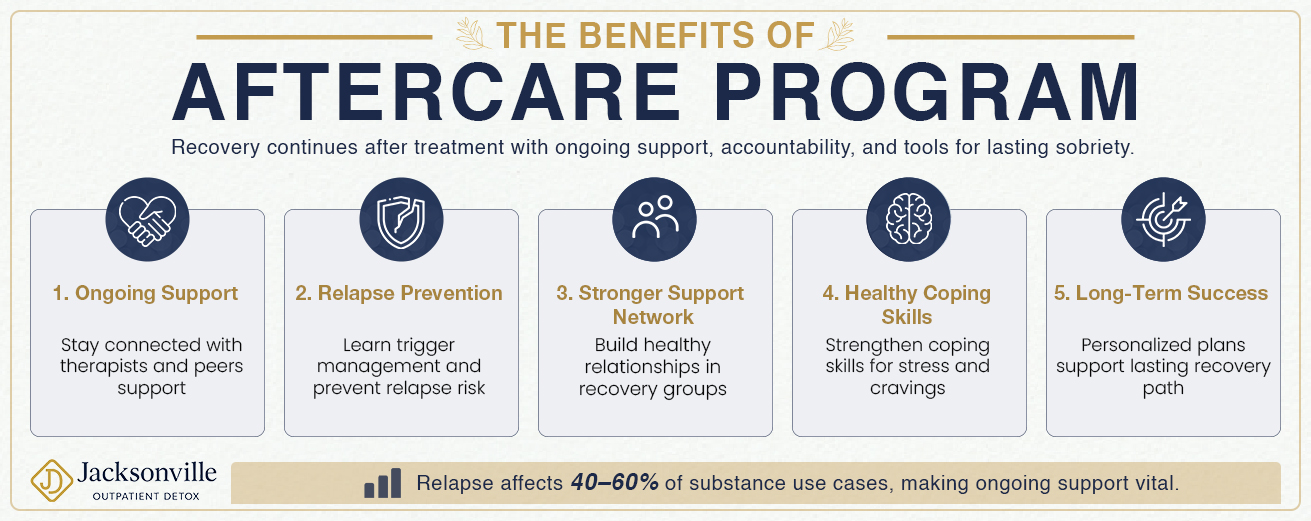
Aftercare programs provide numerous benefits, including:
- Continued structure and accountability: Reduces relapse risk by maintaining routine and focus.
- Access to professional guidance and peer support: Provides tools to cope with challenges and triggers.
- Healthy habit development: Encourages ongoing self-care, skill-building, and lifestyle improvements.
- Rebuilding relationships and community connection: Strengthens social support networks.
Structured aftercare ensures support is available when needed, providing a safety net that helps individuals navigate early recovery challenges successfully.
Transitioning from Treatment to Daily Life
Moving from the structured environment of treatment back into daily life can be challenging. Aftercare provides guidance and practical support for this transition, including:
- Support with housing and employment through trusted community partners and affiliated programs.
- Education on relapse prevention
- Building a sober social network
These resources help individuals maintain independence while continuing to prioritize recovery.
Advantages of Sober Living Programs in Aftercare
Sober living programs offer:
- A substance-free environment
- Peer accountability
- Daily structure
- Supportive community
These programs allow individuals to practice recovery skills, develop life skills, and form meaningful connections. This environment is particularly beneficial in the first year of recovery, when support is most critical.
Regular therapy is a cornerstone of aftercare. Individual and group sessions help individuals:
- Address underlying issues
- Develop coping strategies
- Set and achieve personal goals
- Discuss challenges and successes
Therapy ensures ongoing professional guidance and reinforces the progress made during initial treatment.
Support groups provide a sense of belonging, shared purpose, and accountability. Participation in these groups helps individuals:
- Stay motivated in recovery
- Build a sober social network
- Share experiences and advice
- Gain leadership and service opportunities
A strong recovery community increases the likelihood of long-term sobriety.
12-Step Program Implementation in Aftercare
The 12-step program, including Alcoholics Anonymous (AA) and Narcotics Anonymous (NA), is an effective tool for ongoing support. Aftercare integration includes:
- Regular meeting attendance
- Guidance from experienced sponsors
- Structured steps for personal growth and relapse prevention
Participation strengthens accountability, develops coping skills, and reinforces commitment to sobriety.
How Does Your Support System Affect Recovery?
A strong support system is essential for lasting recovery. Friends, family, peers, and professionals provide encouragement, accountability, and guidance. Feeling supported reduces isolation, reinforces healthy habits, and increases motivation.
Aftercare programs help individuals build and maintain these support systems, ensuring recovery is sustained and challenges are navigated successfully.
Family and Friends in Aftercare
Family involvement is critical to recovery. Aftercare programs often include:
- Family therapy sessions
- Education about addiction and recovery
- Support for loved ones to play a positive role
Engaged families increase the likelihood of long-term recovery by providing encouragement and practical support.
Aftercare Program FAQs
After completing addiction treatment, ongoing support is essential for maintaining sobriety and preventing relapse. Aftercare programs provide guidance, resources, and a supportive community to help individuals successfully navigate life in recovery. Here are some frequently asked questions about aftercare and its benefits for long-term recovery.
An aftercare program typically includes individual and group therapy, relapse prevention education, support groups, and access to community resources. Some programs also offer sober living arrangements and family support services.
The length of an aftercare program varies based on individual needs, but most last from several months to a year or more. Ongoing support is available as long as needed to maintain recovery.
Yes, aftercare programs are personalized to fit each person’s unique situation, goals, and challenges. Counselors work with clients to create a plan that supports their recovery journey.
If a relapse occurs, aftercare staff provide immediate support and help adjust the recovery plan. The focus is on learning from the experience and getting back on track, not on punishment or shame.
Jacksonville Detox has helped many individuals achieve lasting recovery through its aftercare program. Clients report improved relationships, better mental health, and increased confidence in their ability to stay sober. We highlight the importance of ongoing support, community connections, and personalized care. Jacksonville Detox is committed to helping each client build a fulfilling, substance-free life.
To start the aftercare program, contact Jacksonville Detox for a confidential assessment. The admissions team will guide you through the enrollment process and help you create a personalized care plan.
Yes, family involvement is encouraged and supported. The program offers family therapy, education, and resources to help loved ones play a positive role in recovery.
Why Choose Jacksonville Detox’s Aftercare Program?

Create Your Continuing Care Plan With Us
Jacksonville Detox is committed to helping individuals create a personalized continuing care plan that supports long-term recovery. The enrollment process is simple and confidential, starting with an assessment to determine each person’s needs and goals. Clients can expect a supportive environment, regular check-ins, and access to a wide range of resources. The aftercare program includes therapy, support groups, relapse prevention education, and connections to community services.
Setting and achieving recovery goals is a key part of the aftercare process. Counselors work with clients to identify priorities, track progress, and celebrate successes. This ongoing support helps individuals build a fulfilling, substance-free life. To learn more about Jacksonville Detox’s full program overview and how to get started, visit our programs page or contact us today.